
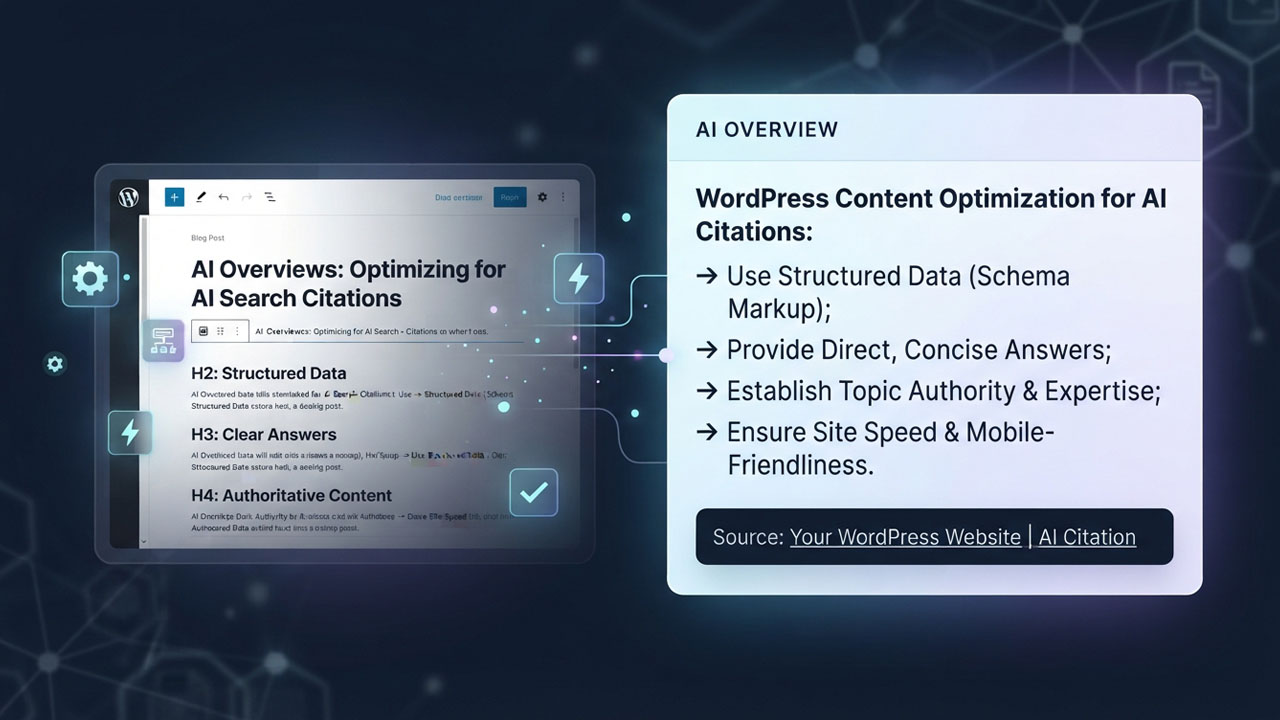
Google’s AI Overviews have fundamentally reshaped organic search traffic. Instead of simply ranking on page one, modern WordPress site owners now compete for direct citation inside AI-generated summaries at the top of search results.
Getting featured in these AI Overviews requires moving past traditional keyword placement. The ranking algorithms now prioritize raw Information Gain, semantic relevance, and highly accessible technical site architecture.
This actionable guide breaks down how Google selects source material for AI Overviews and details the exact technical and structural optimizations your WordPress site needs to land those citations.
How Google’s AI Engine Selects Sources
Google’s AI Overviews do not read websites the way human visitors do. Instead, the system retrieves top-ranking pages, extracts semantic entities, and verifies factual claims across multiple sources before generating a summary.
To earn a citation, your content must present clear, unique insights in a format that the Large Language Model (LLM) can digest without parsing errors.
flowchart TD
    A[User Query Entered] --> B[Real-Time Vector Search]
    A --> C[Semantic Retrieval & Fact Extraction]
    B --> D[Synthesis & Citation Card Generation]
    C --> D
The algorithm favors sources that provide immediate clarity over long, rambling introductions. Sites with clean markup and unambiguous data structures consistently win the citation cards.
Technical WordPress Optimizations for AI Extraction
Your WordPress theme and backend setup directly impact how easily search crawlers parse your site. Technical friction in your code can quietly disqualify your content from being synthesized in AI Overviews.
1. Strip Unnecessary DOM Bloat
Heavy page builders that wrap text in dozens of nested <div> tags introduce DOM complexity. This extra noise makes key text blocks harder for AI parsers to extract cleanly.
- Use Native Blocks: Build templates using lightweight WordPress block themes to keep HTML output clean.
- Reduce HTML-to-Text Ratio: Minimize inline scripts and legacy CSS bundles so crawlers immediately hit your body copy.
- Maintain Semantic Markup: Structure pages strictly using proper
<article>,<section>,<header>, and paragraph tags.
2. Implement Clean JSON-LD Schema
Structured data gives Google explicit context about your content, products, and author credentials. Do not rely solely on basic SEO plugins; ensure your schema graph is clean and fully connected.
{
  "@context": "https://schema.org",
  "@type": "TechArticle",
  "headline": "AI Overviews and WordPress Citation Strategies",
  "author": {
    "@type": "Person",
    "name": "Jane Doe",
    "jobTitle": "Lead WordPress Developer"
  },
  "description": "A technical guide on optimizing WordPress site architecture and content for Google AI Overviews."
}
Nested, validated JSON-LD schema helps the search engine attribute claims directly to verified entities on your site.
3. Optimize Core Web Vitals for Fast Scraping
Google uses rapid retrieval pipelines when compiling real-time AI summaries. If your server response time (TTFB) is slow or hydration delays rendering, the crawler may bypass your page for a faster source.
- Keep your Time to First Byte (TTFB) under 200ms using server-level caching.
- Eliminate JavaScript render-blocking scripts that prevent immediate text parsing.
- Optimize Interaction to Next Paint (INP) so dynamic elements load without main-thread delays.
Content Structuring: Direct Answer Optimization
To secure citations in AI Overviews, you must structure your content so an LLM can easily map questions to answers. This strategy relies heavily on formatting and clarity.
The Answer First Method
Place a concise, 2-3 sentence definition or summary directly underneath every main H2 heading. This gives the AI engine a self-contained snippet to extract instantly.
[H2] What is Information Gain in SEO?

Information Gain is an algorithmic metric used by search engines to score
how much unique information a web page adds compared to existing search results.
Pages with high Information Gain offer original data, primary research, or fresh
technical insights rather than rehashed summaries.
After serving the direct answer, follow up with deeper technical breakdowns, code examples, or step-by-step implementations.
Strategic Formatting Rules for AI Scrapers
LLMs favor scannable data formats when aggregating search results into summary boxes.
- Definition Lists: Use bolded lead-ins for bullet points to highlight key takeaways clearly.
- Comparison Tables: Format product or technical comparisons using standard HTML
<table>tags rather than custom grid plugins. - Numbered Steps: Outline procedures logically so the AI engine can reformat your advice into instant how-to steps.
High “Information Gain”: The Primary Citation Trigger
Google explicitly avoids citing content that simply repeats what ten other articles have already published. To earn a spot in AI Overviews, your WordPress content needs unique source value.
How to Add Real Value
- Include Custom Code Snippets: Provide working, battle-tested code snippets that solve niche WordPress development problems.
- Publish Original Benchmarks: Share real performance tests, speed comparisons, or conversion data from your own projects.
- Document Hands-On Experience: Write from a firsthand perspective, detailing specific edge cases and real-world troubleshooting steps.
Frequently Asked Questions (FAQ)
How do Google AI Overviews impact WordPress organic traffic?
AI Overviews often reduce traditional click-through rates for broad informational queries. However, referral traffic coming directly from AI citation links carries much higher user intent, resulting in better conversion rates.
Can I opt my WordPress site out of AI Overviews?
Yes. You can use the nosnippet or max-snippet robots meta tags in your WordPress header to restrict how Google extracts content. However, blocking snippet extraction also prevents your site from appearing in standard featured snippets.
Do I need a specific plugin to optimize for AI Overviews?
No single plugin guarantees citation. Focus on plugins that output valid JSON-LD schema, maintain lightweight block-based templates, and keep your overall site performance fast.
Does original media help win citations in AI Overviews?
Yes. Custom diagrams, original screenshots, and structured data tables give Google unique assets to reference, increasing the overall authority and Information Gain score of your page.
Final Action Plan for WordPress Developers
Winning citations in AI Overviews isn’t about gaming an algorithm; it’s about making your content the most reliable, easily parsed answer on the web.
Audit your top WordPress posts today. Simplify your DOM structure, inject validated schema, add immediate answer summaries under H2s, and back up every claims with original research or practical code examples.
Leave a Reply